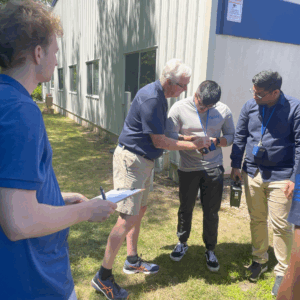



“In the early days of RSCS, our workforce model looked very different than it does today,” explains Fred Erskine, RSCS Sr. Director of Site Services. “We did not have a radiation technician labor pool. Instead, our teams were composed almost entirely of highly credentialed professionals supporting specialized, task-specific work at nuclear power plants. The work was essential, but it was not structured around recurring, technician-driven revenue.”
RSCS recognized the industry was evolving and took steps to shift towards a technician-based workforce.
The Shift Toward a Radiation Technician Workforce
As nuclear operators began prioritizing predictable, scalable outage support, it became apparent that a sustainable business model required recurring technician resources, particularly for refueling outages. Rather than remaining purely project-oriented, the opportunity was to build a reliable outage technician workforce that utilities could depend on year after year.
That shift accelerated when RSCS secured a major contract with a Southwest utility. They supported four refueling outages by providing approximately 100 technicians per outage. It was an early proof point that a technician-based model could deliver both operational value to utilities and long-term growth potential.
Industry Change and Regulatory Hurdles
In 2017, the nuclear industry formalized new requirements for contingent workforce technicians, including specific Radiation Protection (RP) training standards. At the time, key competitors to RSCS already had established programs through the Electric Power Research Institute (EPRI).
“For us, achieving approval took time, roughly a year and a half of development, validation, and regulatory alignment. While challenging, that effort laid the foundation for everything that followed.” says Fred Erskine.
Expanding Into Decommissioning
With a qualified outage worker base in place, RSCS made a strategic decision: apply this technician model to the growing decommissioning market.
Working closely with the leader in the marketplace, the company positioned their technicians to support decommissioning projects nationwide. Over time, that strategy paid off.
Supporting Operating Plants During Peak Demand
Between 2018 and 2023, the RSCS technician workforce also played a critical role at operating nuclear plants. They provided backup and supplemental staffing for refueling and maintenance outages, ensuring utilities had access to qualified personnel during periods of peak demand.
These efforts strengthened relationships across the industry and positioned RSCS for larger, longer-term contracts.
Major Utility Contracts and Rapid Growth
By 2025, that groundwork translated into significant wins with major nuclear operators on the East Coast, mid-Atlantic, and deep South..
With these awards came rapid scale. RSCS went from a workforce of a few hundred technicians to more than 800 during a single outage season.
What began as a professional services organization for RSCS has evolved into a scalable, technician-driven workforce model that supports the full nuclear lifecycle. And as the industry enters its next phase, continued expansion will be essential to meeting the needs of utilities, regulators, and the skilled technicians who make safe nuclear operations possible.
For more information on RSCS’s Technical Staffing, please visit: RSCS Staffing