 RSCS made several presentations this week at the Radiological Effluents and Environmental Workshop (REEW) in New Orleans, LA organized by the Nuclear Energy Institute. This meeting provides professionals in the nuclear power industry the opportunity to share innovated methods for environmental monitoring. Our staff was invited to present to this forum to share insights and approaches that have been developed over several decades of working with operational and decommissioning nuclear facilities, providing environmental monitoring services that measure and characterize radioactivity in liquid and airborne effluents, soils, subsurface structures and groundwater.
Eric Darois presented on “Industry Issues Related to Radiation Monitoring Instrumentation: and, Where Have We Been?” that drew upon his involvement in the implementation of the accident monitoring requirements of NUREG 0737 in the 1980’s, including remote monitoring system design and use for offsite dose projections using post-accident source terms for all accident release pathways for BWRs and PWRs. His presentation reviewed the regulatory history for post-accident monitoring for effluents prior to and following the TMI accident. The requirements for effective noble gas monitors was examined, along with a survey of available equipment, including an interim noble gas monitor developed by RSCS.
In addition, Eric Darois presented on “Decommissioning Highlights and Lowlights”, leveraging the significant experiences gained in decommissioning since the 1990’s running several decommissioning projects. His presentation addressed the many regulatory changes that occur throughout the decommissioning process, beginning with changes to design-base accidents, regulatory commitments for operations, ODCM changes, procedure changes, staff reorganizations and many more. His presentation described the major phases of decommissioning with an emphasis on the implementation of the regulatory criteria prescribed in 10CFR20 Subpart E, the development of the site’s License Termination Plan (LTP), and the options that may be considered for the site’s end-state.
Matthew Darois presented on “Analysis of Empirical In-Situ Corrosion Rates with Co-Located Soil Corrosivity Chemistry Parameters at Nuclear Power Facilities” to share insights gained from the data collected at several operational nuclear utilities while implementing soil corrosivity, in-situ corrosion rate and electrical potential monitoring assessments at nuclear power facilities since 2013 as part of the NEI 09-14 Buried Pipe and Tank Inspection Initiative. Data presented demonstrated that industry standard soil corrosivity assessments performed along buried pipelines at nuclear power facilities may under-predict, or over-predict outside diameter corrosion rates of buried pipes and tanks, potentially resulting in incorrect maintenance projections, leaks and environmental contamination, license renewal delays and incorrect cost projections in a plant’s extended period of operation.



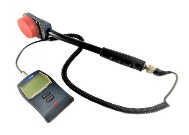 RSCS will exhibit at the Mirion Connect 2018 Users’ Conference in Bonita Springs FL from August 6-10, where we will demonstrate our SIM-Teq training simulator product line. Several new models will be available for demonstration, including the RDS-31TD and the TelepoleTD. These latest models to be added to the SIM-Teq product line, which includes other model survey meters and dosimeters, are built with OEM hardware, providing the functionality of the real radiation survey instruments as they detect and respond to our simulated TWR “live” sources of radiation.